

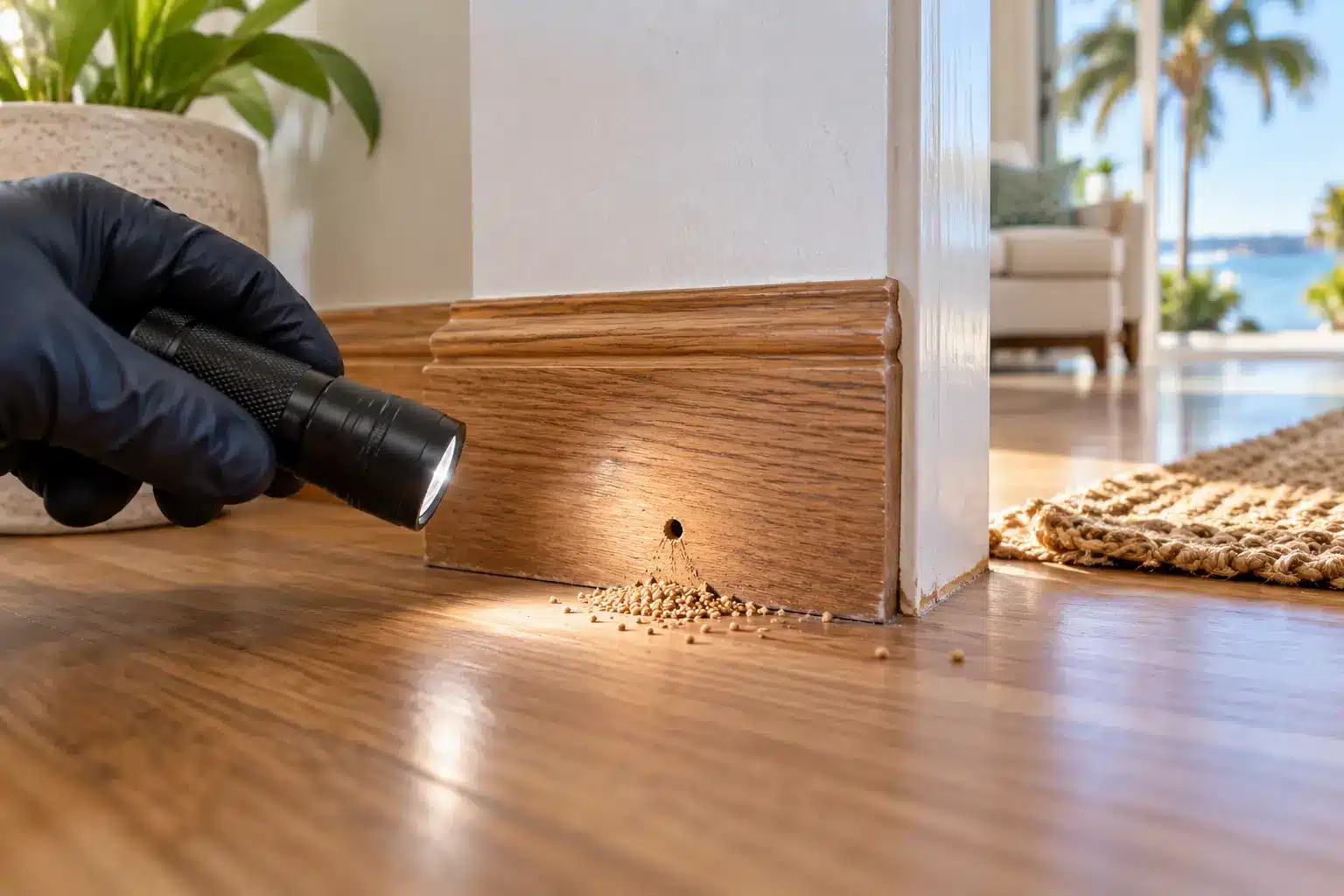
Small piles of tan, brown, or dark pellets near a baseboard or window can be easy to dismiss as dust. In a Florida home, however, those grains may be drywood termite frass. Frass is the compact waste drywood termites push out of the wood where they live.
Finding suspected termite droppings does not reveal how large an infestation is or how far it has spread. It does give you a useful reason to have the area evaluated. A professional inspection can distinguish termite evidence from ordinary debris and help determine whether treatment is needed.
What Do Drywood Termite Droppings Look Like?
Drywood termite frass consists of very small, hard pellets. Under magnification, the pellets tend to be elongated with flattened or slightly indented sides. One pile may include tan, reddish-brown, cream, or nearly black grains. Color alone does not identify the wood source or establish whether activity is current.
Homeowners often describe frass as looking like coarse sand, ground pepper, or tiny seeds. The pellets may collect in a neat mound beneath a small opening in wood. That opening is sometimes called a kick-out hole because termites use it to remove waste from their galleries.
According to the Florida Department of Agriculture and Consumer Services, drywood termites live and forage in dry wood rather than maintaining contact with soil. That is why evidence may appear in upper floors, roof framing, furniture, door frames, and other locations far from the foundation.

Frass or Sawdust? What to Check
Frass and sawdust can look similar from a standing height. A few details can help you decide whether to preserve the evidence for an inspector.
Consistent pellet shape
Termite pellets are usually more uniform than construction dust or sawdust. Sawdust tends to contain irregular fibers, curls, and particles of different sizes.
A pile that returns
If you carefully clean the area and a new pile appears in the same location, material may still be falling from an active kick-out hole. Do not seal the hole before an inspection. Its position can help a technician trace the affected wood.
A nearby hole or seam
Look above the pile for a pin-sized opening, crack, joint, nail hole, or gap in the wood. Avoid probing or enlarging it. Drywood termite galleries can remain concealed beneath a thin outer layer of wood.
Other termite signs
Discarded wings, hollow-sounding wood, blistered surfaces, and swarming insects can support the need for a closer look. No single sign tells you the full extent of an infestation.
Where Florida Homeowners Commonly Find Termite Droppings or Frass
Drywood termites can infest sound, dry wood without soil contact. Common places to check include:
- Window sills and window frames
- Baseboards and door trim
- Attic rafters, trusses, and roof decking
- Hardwood floors and stair components
- Built-in cabinets and wood paneling
- Fascia boards, soffits, and porch framing
- Wooden furniture brought into the home
Frass may fall through a crack or opening and land away from the actual gallery. An inspector may need to evaluate the wood above, beside, or behind the visible pile rather than only the surface where the pellets collected.
Does Frass Mean the Termites Are Active?
Frass confirms that drywood termites occupied the wood at some point, but a pile alone cannot reliably establish current activity. Old pellets may remain after a previous infestation or treatment. On the other hand, recently cleaned piles that return can suggest continuing activity nearby.
An inspection may include visual examination, sounding or probing accessible wood, checking adjacent structural elements, and looking for additional evidence. The findings help determine whether the problem appears isolated or may involve multiple areas.
What to Do When You Find Suspected Termite Pellets
- Photograph the pile and the area above it before cleaning.
- Save a small sample in a sealed bag or clear container if practical.
- Note when and where you found it.
- Check nearby windows, trim, attic wood, and floors for related signs.
- Avoid spraying household insecticide into the hole or sealing it.
- Arrange a professional termite inspection.
A surface spray may kill termites that happen to be exposed, but it does not show where galleries extend or whether other colonies are present. Identification and inspection should come before a treatment decision.
How Drywood Termite Problems Are Treated
The right approach depends on the species, the number and location of affected areas, access, and evidence of spread.
For a small, clearly defined area, a technician may consider a localized treatment. When drywood termite activity is widespread, inaccessible, or present in multiple parts of a structure, whole-structure fumigation may be recommended. Our guide to spot treatment versus fumigation explains why the visible pile is only one part of that decision.
Because drywood termites live inside the wood, treatment should be based on inspection findings rather than the amount of frass visible on the floor.
Can You Prevent Drywood Termite Frass?
Frass is evidence rather than the cause of a problem. Prevention focuses on reducing opportunities for termites to enter and helping infestations get detected sooner.
- Repair damaged screens around vents, windows, and attic openings.
- Seal unnecessary gaps in exterior wood after confirming they are not active termite openings.
- Inspect used wood furniture before bringing it inside.
- Maintain paint or protective finishes on exposed wood.
- Replace water-damaged or decayed exterior wood.
- Include attics, garages, and detached wood structures in routine inspections.
Florida homes face termite pressure throughout the year. Periodic inspection is especially valuable because drywood colonies can remain out of sight inside structural wood.
Schedule a Florida Termite Inspection
If you found pellets that look like termite droppings, keep the evidence and let a licensed professional evaluate it. My Son & I Pest Control provides termite inspections and treatment recommendations for homes across South Florida, Tampa Bay, and Central Florida.
Contact our termite team or call (305) 794-5103 to schedule a free termite inspection.
Frequently Asked Questions
Are termite droppings dangerous to touch?
Frass is not usually treated as a toxic material, but any household debris can contain dust or allergens. Avoid stirring it into the air. Use gloves, save a sample if helpful, and clean the area after documenting it.
Can I vacuum up termite frass?
Yes, after photographing the evidence and saving a sample. Check the same location over the next several days. A returning pile is useful information for your inspector.
Does a large pile mean a large colony?
Not necessarily. The visible amount can reflect how long pellets accumulated, where the kick-out hole is located, and whether the area was previously cleaned. Inspection is needed to assess the likely extent of activity.
Are termite pellets always tan?
No. Their color can range from cream and light tan to reddish, brown, or dark tones. Color alone is not a reliable way to identify the source or age of the pellets.

