

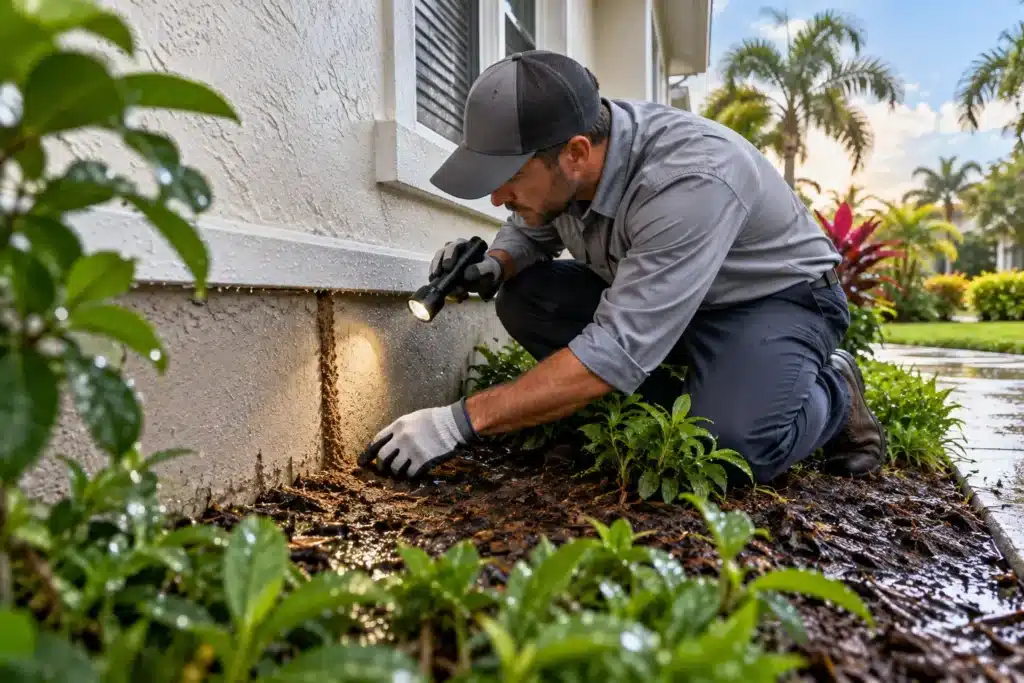
After a strong Florida rain, you may notice winged insects near a window, a new mud line on the foundation, or damp wood around a leak. Rain does not suddenly create a termite colony. It can, however, increase moisture around a structure, expose drainage problems, and coincide with conditions that make termite swarmers easier to notice.
A quick post-rain check can help you catch conditions that attract wood-destroying organisms or reveal evidence that was already present.
Spotting Signs of Termites After Rain and Why They May Appear
Different termites live in different environments. Subterranean termites nest in soil and travel to wood through protected routes, often including mud tubes. Drywood termites live inside dry wood and do not require soil contact.
Heavy rain can affect what homeowners observe in several ways:
- Wet soil and humid air can accompany seasonal swarming conditions.
- Water may wash dirt away and make a foundation tube more visible.
- Roof, plumbing, or drainage failures can dampen structural wood.
- Saturated landscaping can hold moisture against a wall or foundation.
- Storm activity can drive homeowners indoors, where discarded wings and swarmers are easier to spot near lights.
The timing alone does not identify the termite species or prove that rain caused the activity. The location and type of evidence matter more.
A Safe Post-Rain Termite Checklist
Wait until lightning, standing water, and slippery conditions have passed. Then walk the property without disturbing suspected evidence.
1. Check the foundation perimeter
Look where the wall meets the foundation and soil. Subterranean termite tubes often resemble narrow lines of dried mud. Pay extra attention to shaded areas, utility penetrations, steps, patios, and places hidden by thick plants.
Do not assume every mud line is active, and do not rely on breaking it open as your only test. A professional can evaluate the tube and the surrounding structure.
2. Look for standing water and poor drainage
Water should move away from the home. Note clogged gutters, overflowing downspouts, negative grading, irrigation overspray, and low areas that remain wet. These conditions do not prove termites are present, but correcting persistent moisture can reduce conducive conditions and protect building materials.
3. Inspect wood-to-soil contact
Fence posts, siding, door frames, lattice, form boards, and stacked lumber can create concealed pathways when wood touches soil. Keep firewood and scrap wood off the ground and away from exterior walls. Ask a qualified contractor about structural wood that contacts soil.
4. Check attics and ceilings for leaks
After the storm, look for stains, damp insulation, water marks, and wet roof framing from a safe, accessible position. Do not walk on unsupported ceiling material. A roof leak should be repaired promptly even if no termites are found.
Moist or decayed wood can support several wood-destroying organisms, including dampwood termites in suitable conditions. A moisture problem and a termite problem may need separate repairs and treatment.
5. Look near windows and lights for wings
Swarming termites shed their wings after pairing. Small piles of similar-sized wings near windows, doors, or interior lights deserve attention. Flying ants can look similar, so save a specimen or take a clear photograph rather than relying on a quick visual guess.
6. Check for drywood termite pellets
Rain may draw your attention to parts of the home you do not normally inspect. Inside, look for small, gritty piles below window trim, baseboards, attic wood, or cabinets. Our guide to termite droppings and drywood frass explains how these pellets differ from ordinary sawdust.

Termite Swarmers or Flying Ants?
Both termites and ants produce winged reproductive insects. Termite swarmers generally have straight-looking antennae, a broad waist, and two pairs of wings that are similar in length. Flying ants typically have elbowed antennae, a pinched waist, and front wings that are longer than the rear pair.
Tiny insects are difficult to identify without magnification. If you can do so safely, collect a few in a closed container or take close, well-lit photographs. A licensed inspector can confirm what you found.
What Not to Do After Finding Signs of Termites After Rain
- Do not spray household insecticide over the evidence before identification.
- Do not seal suspected openings or remove damaged wood before inspection.
- Do not assume a few dead swarmers mean the source is gone.
- Do not enter a flooded crawl space or climb onto a wet roof.
- Do not wait for visible damage if mud tubes or indoor swarmers are present.
The goal is to preserve clues and address safety hazards, not to diagnose the entire structure from one sign.
When to Schedule a Professional Inspection
Arrange an inspection when you find indoor termite swarmers, discarded wings, mud tubes, recurring frass, hollow or damaged wood, or unexplained moisture near structural materials. It is also sensible after a major leak or drainage failure exposes wood to prolonged dampness.
A termite inspection can help identify the species, affected areas, and relevant conditions before treatment is recommended. Depending on the findings, options may include soil treatment, baiting, localized treatment, moisture correction, or structural fumigation. There is no single treatment that fits every termite situation.
Reduce Moisture Around Your Florida Home
These maintenance steps can make the property less favorable to moisture-related damage and easier to inspect:
- Clean gutters and direct downspouts away from the foundation.
- Repair roof and plumbing leaks promptly.
- Adjust irrigation so water does not strike walls or remain against the foundation.
- Trim dense vegetation to preserve a visible inspection gap.
- Remove unnecessary wood, cardboard, and cellulose debris near the structure.
- Keep crawl spaces and attics appropriately ventilated when the building design calls for it.
- Include termite checks in routine home maintenance.
For a broader prevention plan, see our Florida termite prevention guide.
Get Help Identifying Termite Evidence
If a storm revealed mud tubes, wings, pellets, or damaged wood, My Son & I Pest Control can evaluate the evidence and explain the appropriate next steps. Our licensed team serves South Florida, Tampa Bay, and Central Florida.
Schedule a free termite inspection or call (305) 794-5103.
Frequently Asked Questions
Does rain cause termites to enter a house?
Rain does not create an infestation overnight. Existing colonies may become more noticeable during humid or rainy periods, and drainage or leak problems can create conditions that deserve correction.
Why are flying termites near my windows after a storm?
Winged termites are attracted to light and may collect at windows. Their appearance can indicate a nearby colony, but an inspection is needed to locate the source and identify the species.
Should I break open a mud tube?
Breaking a small section can sometimes reveal activity, but it does not determine whether the colony is gone or where it extends. Photograph the tube and arrange an inspection rather than removing it completely.
Can fumigation treat subterranean termites?
Structural fumigation is mainly associated with drywood termite infestations inside a structure. Subterranean termite management commonly focuses on soil treatments, baiting, and entry conditions. Treatment should follow species identification.

