

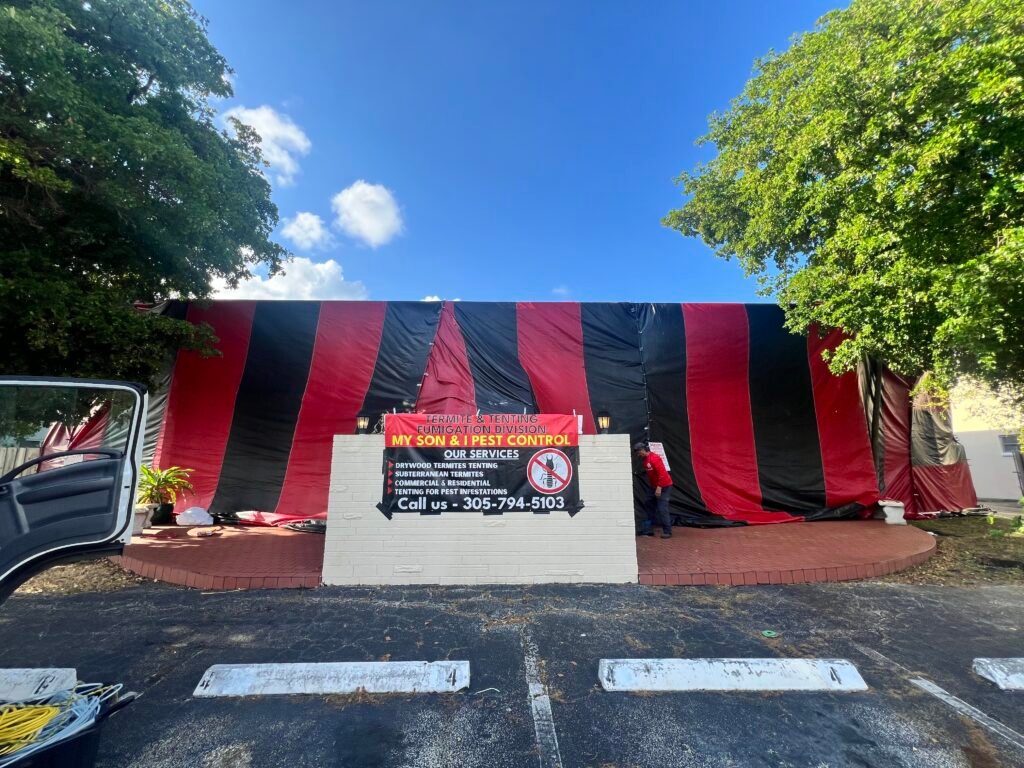
Understanding Termite Tenting Costs
What Is Termite Tenting and Why Is It Used?
Termite tenting, also known as structural fumigation, is a treatment method primarily used for drywood termite infestations. The process involves covering the entire house with a sealed tent and introducing a gas such as Vikane to penetrate deep into the wood, killing termites throughout the structure. This approach is distinct from spot treatments or liquid barriers because it reaches every part of the home at once, making it highly effective for widespread or hard-to-locate infestations.
Homeowners often choose tenting when termites have spread across multiple areas, when they are present in wall voids or finished wood, or when other treatments have failed. Because the method requires the house to be vacated for a few days, it is a more intensive solution than localized chemical applications. The cost of tenting reflects this complexity, but many property owners consider it a worthwhile investment for complete eradication.

Average Termite Tenting Costs
The cost of termite tenting varies based on several factors, but industry sources provide consistent price ranges. According to recent data, termite tenting costs between $1 and $4 per square foot of interior space. For a typical home, this translates to a total cost of $2,000 to $8,000. For a standard 2,500-square-foot house, the average cost falls between $2,500 and $7,750. Another way to measure the cost is by linear foot of the home’s exterior, which runs $5 to $20 per linear foot.
In certain regions, the rates differ. For example, in California, tenting costs range from $1.30 to $4.35 per square foot, which is slightly higher than the national average of $1 to $3 per square foot. General termite treatment in California averages $650, with a typical range of $420 to $2,000, though these figures include non-tenting methods as well. It is important to note that severe infestations can push costs higher; some reports indicate that severe cases may reach up to $9,300.
Factors That Affect Tenting Costs
Home Size and Construction
The size of your home is the primary driver of cost because fumigation uses more gas, more labor, and larger tarps for bigger structures. The shape and construction type also matter. Homes with complex rooflines, multiple stories, or attached garages require more preparation and tarping, which can increase the price. Materials like wood siding or stucco may affect how the tent seals, but all residential structures can be fumigated.
Infestation Severity and Termite Type
The severity of the infestation influences the amount of gas needed and the duration of the treatment. A light, localized infestation may still require full tenting, but severe cases often call for higher gas concentrations or longer exposure times. The termite species also matters. Tenting is designed for drywood termites, but if subterranean or Formosan termites are present, other methods may be recommended, and pricing would follow those treatment paths.
Location and Regional Pricing
Pest control costs vary by region due to differences in labor rates, real estate values, and local regulations. California, for instance, has higher per-square-foot rates than the national average. Homeowners in coastal or densely populated areas may also face higher bids. It is a good idea to get quotes from local providers who understand your area’s specific conditions.
Additional Preparations and Services
Before fumigation, homeowners must prepare the property: remove plants, turn off pilot lights, secure food and medication, and sometimes remove certain items. Some fumigation companies include these instructions in the quoted price, while others charge extra for additional services such as tent removal or post-treatment inspection. Always ask what is included in the estimate.

Photo by Gustavo Fring on Pexels
Tenting vs. No-Tent Treatments
Not all termite treatments require a tent. No-tent methods include liquid soil barriers, bait systems, and spot treatments. These are typically measured by linear foot rather than square foot, making direct cost comparisons tricky. Nationally, no-tent treatments cost $3 to $16 per linear foot. In California, the range is $3.36 to $18.40 per linear foot. For a 1,500-square-foot home, the total cost of a no-tent barrier might be comparable to tenting or lower, depending on the house’s perimeter.
However, no-tent methods are not suitable for drywood termites because those termites live inside the wood rather than in the soil. Tenting remains the standard for eliminating drywood termite colonies throughout the entire structure. Localized treatments can work for small, accessible infestations, but if the termites are widespread, tenting is the only reliably complete solution.
| Treatment Method | Typical Measurement | Cost Range | Best For |
|---|---|---|---|
| Tenting (fumigation) | Per sq. ft. or per linear ft. | $1 – $4/sq. ft. or $5 – $20/linear ft. | Drywood termites, whole-structure infestation |
| No-tent (liquid/baits) | Per linear foot | $3 – $16/linear ft. nationally | Subterranean termites, localized treatment |
It is not accurate to claim that tenting is always more expensive than no-tent treatments. For a small home with a large perimeter, a no-tent barrier could cost more than a tent. Homeowners should compare quotes based on their specific home and pest situation.
How to Get an Accurate Tenting Cost Estimate
Because termite tenting involves a customized plan for each property, the only way to get a reliable price is to request a professional inspection. Many pest control companies offer free inspections for termite issues. During the inspection, the technician will measure the house, assess the infestation type and severity, note construction details, and provide a written estimate.
When comparing estimates, consider more than the bottom line. Ask whether the price includes the fumigant, the tent, the labor, and any follow-up inspections. Verify that the company uses in-house crews rather than subcontractors, as this can affect accountability and service quality. Also, check that the company is licensed and insured for fumigation work in your state.
If you receive multiple quotes, make sure they are based on the same scope of work. For example, one bid may assume you will remove all vegetation yourself, while another includes that service. Clarify these details before making a decision.
Schedule Your Free Termite Inspection!
Frequently Asked Questions About Termite Tenting Costs
Standard homeowners insurance often excludes termite damage because it is generally treated as a gradual or maintenance-related problem, but policy language varies. Review your policy or ask your insurer about the specific coverage and exclusions that apply to your home.
Standard homeowners’ insurance policies typically do not cover termite infestations or the cost of treatment. Termite damage is considered a preventable maintenance issue. However, if the infestation causes fire or structural collapse covered by a rider, some assistance may be available. Check your policy or speak with your agent to confirm.
How long does a termite tenting treatment take?
A typical tenting treatment lasts 24 to 72 hours. The exact duration depends on the type of fumigant used, the size of the house, and the temperature. The pest control company will provide a timeline during the inspection. You must vacate the home for the entire period plus a short ventilation phase afterward.
Can I stay inside my home during tenting?
No. For safety reasons, all occupants, including pets, must leave the house during fumigation. The gas used in tenting is toxic to humans and animals. The company will provide a schedule for when it is safe to re-enter, typically after the tent is removed and the house has been ventilated with a clearance test.
What happens if termites return after tenting?
Warranty terms vary by provider and may require scheduled inspections or annual renewal. Ask for the agreement in writing and confirm the coverage period, included termite species, re-treatment terms, exclusions, transferability, and whether any repair coverage is included.
How much does termite damage repair cost on average?
Termite damage repair costs vary widely based on how long the infestation remained hidden, which structural components were affected, material prices, and local labor. A termite treatment estimate does not include unrelated structural repairs, so homeowners should request separate written scopes when both pest treatment and construction work are needed.
Understanding termite tenting costs starts with knowing what the written estimate includes, why the treatment is being recommended, and how the home’s size and construction affect preparation. Review our termite tenting preparation guide, learn when fumigation may be appropriate, and compare the estimate with the broader termite treatment options available in Florida.
Need a property-specific estimate? Call (305) 794-5103 to schedule a free termite inspection with My Son & I Pest Control.

