
7 Warning Signs of Termites in Florida Homes (Don’t Ignore #4)
Florida is one of the most termite-active states in the country. With year-round warmth, high humidity, and multiple termite species active in every region of the state, Florida homeowners face a level of termite pressure that most of the country simply does not experience.
The challenge is that termites are designed to go unnoticed. They feed inside walls, inside structural wood, and inside furniture, hidden from view, silent, and relentless. By the time most homeowners notice something is wrong, a colony has often been established and feeding for a year or more.
Knowing what to look for is your most powerful tool. Here are the seven warning signs every Florida homeowner should know, and what to do when you spot them.
Sign #1: Termite Frass (Droppings) Near Wood Surfaces
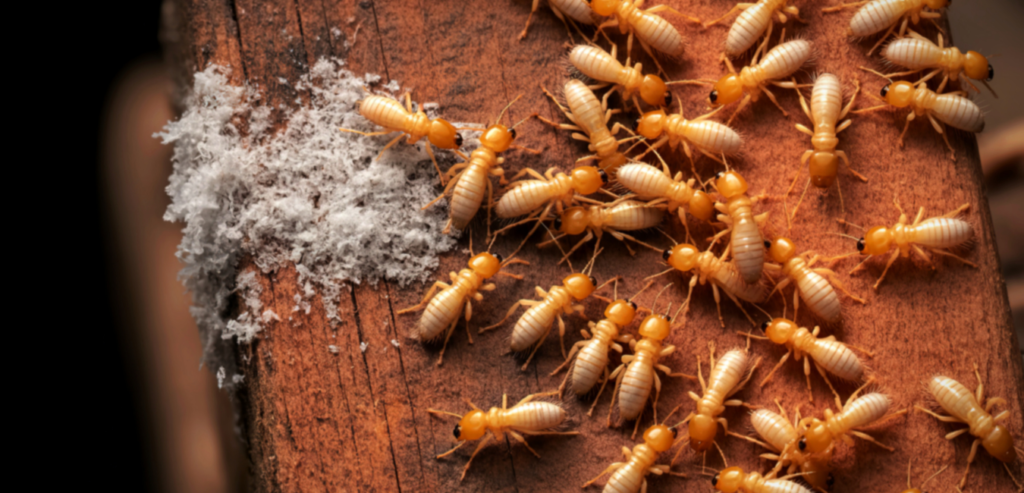
If you notice small piles of what looks like sand, sawdust, or coffee grounds near baseboards, window sills, door frames, or furniture, you may be looking at termite frass, the droppings of drywood termites.
Drywood termites are unique in that they push their waste out of small kick-out holes in the wood, creating tiny piles in predictable locations. Unlike subterranean termite waste, drywood frass is dry, hard, and uniform with a characteristic six-sided shape when examined closely.
What to do: Don’t sweep it up and forget it. Photograph the location and the pile, then call for a professional inspection. Frass indicates active drywood termite feeding, which means a live colony is inside that wood right now.
Florida note: Drywood termite frass is most commonly found in South Florida homes, but is present throughout the state wherever drywood termites are active which is essentially everywhere in Florida.
Sign #2: Discarded Swarmer Wings
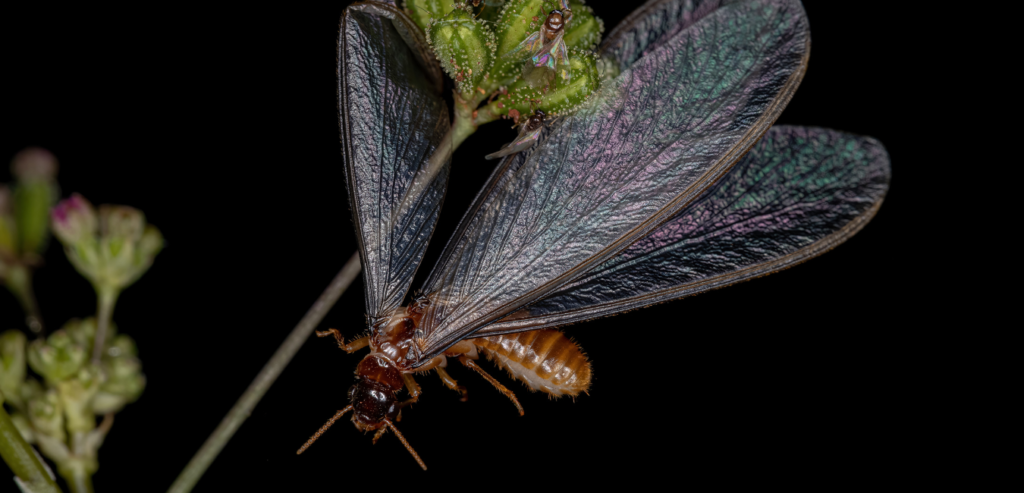
When a termite colony matures, it produces winged reproductives, called swarmers or alates, whose job is to leave the colony, find a mate, and start new colonies elsewhere. After swarmers land, they shed their wings immediately.
Finding piles of small, equal-length wings near windows, doors, light fixtures, or along baseboards is a strong indicator that a termite colony is either established in or very near your home.
Drywood termite swarmers in Florida are typically active in late spring through summer, though coastal areas of South Florida can see swarming year-round due to the tropical climate.
Subterranean termite swarmers typically emerge in the spring, often triggered by rain and rising temperatures.
What to do: Collect a few wings if you can and photograph them in place. A pest control professional can use the wing characteristics to identify the species, which determines the appropriate treatment.
Do not confuse with: Flying ant wings. Ant wings are unequal in size; the front pair is larger than the rear. Termite wings are equal in length and longer than the termite’s body. Termites also have straight antennae; ants have elbowed antennae.
Sign #3: Mud Tubes Along Foundations or Walls
Subterranean termites, including the destructive Formosan species common in South Florida, cannot survive exposure to open air. To travel between their underground colony and the wooden structure they are feeding on, they build mud tubes, pencil-width tunnels made from soil, wood particles, and saliva.
Mud tubes are most often found on exterior foundation walls, interior piers, concrete block walls, exposed wood near the foundation, and utility penetrations where pipes or wires enter the structure.
What to do: If you find a mud tube, do not destroy it before calling for an inspection. The tube itself helps the inspector determine the species and the activity level of the colony. If you break open the tube and see live termites inside, the colony is actively foraging. If the tube is empty and dry, it may be inactive, but an inspector should confirm this.
Florida note: Subterranean termite pressure is high throughout Florida, particularly in Hillsborough County, Miami-Dade, Broward, and coastal areas where soil moisture is elevated.
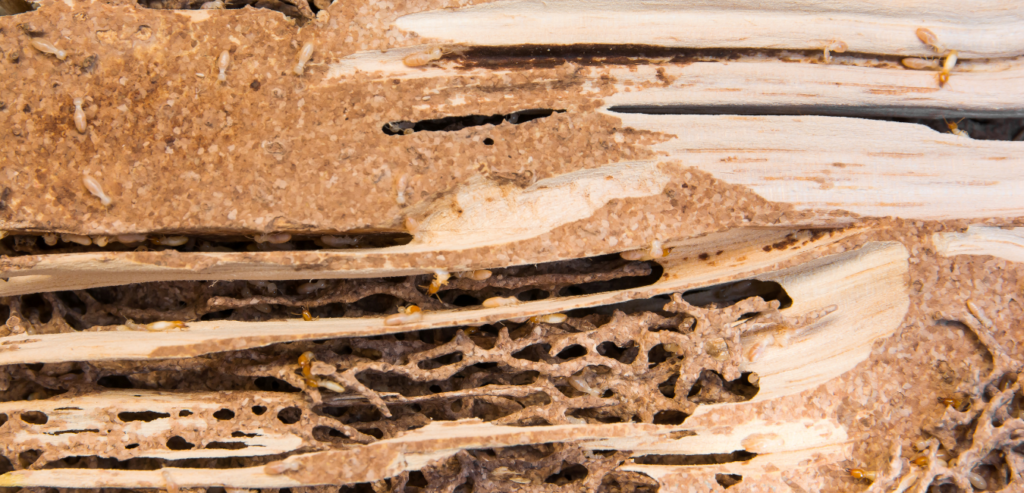
Sign #4: Hollow-Sounding or Damaged Wood (The One Most Homeowners Miss)
This is the sign that most homeowners overlook, and often the one that reveals the most advanced infestations.
Termites consume wood from the inside out, leaving an increasingly thin shell of surface material while excavating the interior. Wood that has been significantly compromised will produce a dull, hollow sound when tapped with a hard object, a screwdriver handle, a coin, or your knuckle.
How to check: Tap along baseboards, door frames, window frames, exposed structural wood in the garage or attic, and any area where you have noticed other signs. Solid wood sounds dense. Termite-damaged wood sounds hollow or papery.
In advanced cases, you may be able to push a screwdriver into the wood with little resistance, another indicator of internal gallery damage.
Why this sign is often missed: Because it requires active investigation. Unlike frass or swarmer wings, which appear on their own, hollow wood only reveals itself when you go looking.
Florida note: This is one of the most reliable self-inspection techniques for drywood termite detection in older South Florida homes.
Sign #5: Difficult-to-Open Doors and Windows
If a door or window that has always operated smoothly suddenly becomes tight or difficult to open, and there’s been no flooding, major humidity event, or house settling to explain it termites may be the cause.
As drywood termites consume structural wood, the wood loses material and integrity. In some cases, moisture from the termites’ feeding activity is absorbed into the surrounding wood, causing subtle warping. Doors and windows in affected frames begin to bind or stick.
What makes this tricky: Doors and windows in Florida can also bind due to seasonal humidity swelling in wood frames. This is completely normal and typically reverses in drier periods. The concern is when the binding is new, progressive, and occurring alongside any other sign from this list.
Sign #6: Bubbling, Peeling, or Uneven Paint
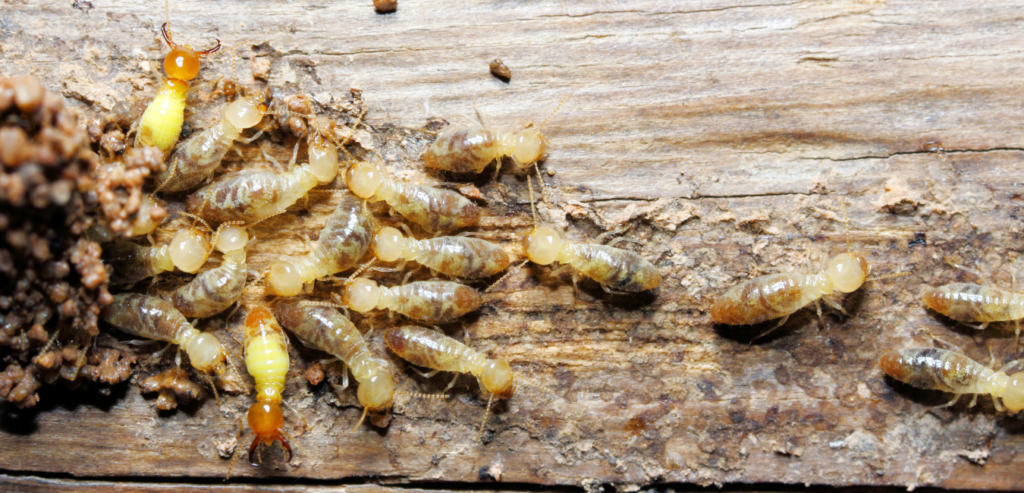
Termites produce moisture as they feed and tunnel through wood. In enclosed areas like wall cavities, this moisture can accumulate and affect the paint or drywall surface above the damaged wood.
Paint that is bubbling, peeling, or developing an uneven surface without any visible water source, no plumbing leak, no roof leak, no exterior moisture intrusion, may be indicating termite activity in the wall behind it.
What to do: Before assuming it’s a paint or moisture issue, check the baseboard below and the window sill nearby for frass. If you find frass and paint bubbling in the same area, the combination strongly suggests active termite feeding inside the wall. Call for a professional inspection.
Note: This sign is more commonly associated with subterranean and dampwood termites, which introduce more moisture into the wood than drywood species. In Florida, it’s most common in properties with plumbing-adjacent termite activity or in coastal areas with high ambient humidity.
Sign #7: Visible Termite Swarmers Inside the Home
If you see live, winged insects swarming inside your home, especially near windows, skylights, or light fixture, there is a very high probability that an active termite colony is established inside the structure, not outside it.
Swarmers emerge from the colony to reproduce. When they emerge indoors, it means the colony they came from is inside the building, inside the walls, attic, or structural wood. Swarmers emerging outdoors near the structure may still indicate an adjacent colony, but indoor swarming is a more urgent signal.
Don’t confuse with: Flying ants, which also swarm and are attracted to light. Review the wing differences described in Sign #2. If you’re not certain what you’re seeing, capture a few insects in a sealed bag or take clear photos from multiple angles before calling for an inspection.
What to do: Do not spray with consumer pesticide. Killing the swarmers does not address the colony, and sprayed products may drive the colony deeper into the structure, making inspection and treatment more difficult. Call a professional immediately.